 Call:
Call:  Mail:
Mail: 


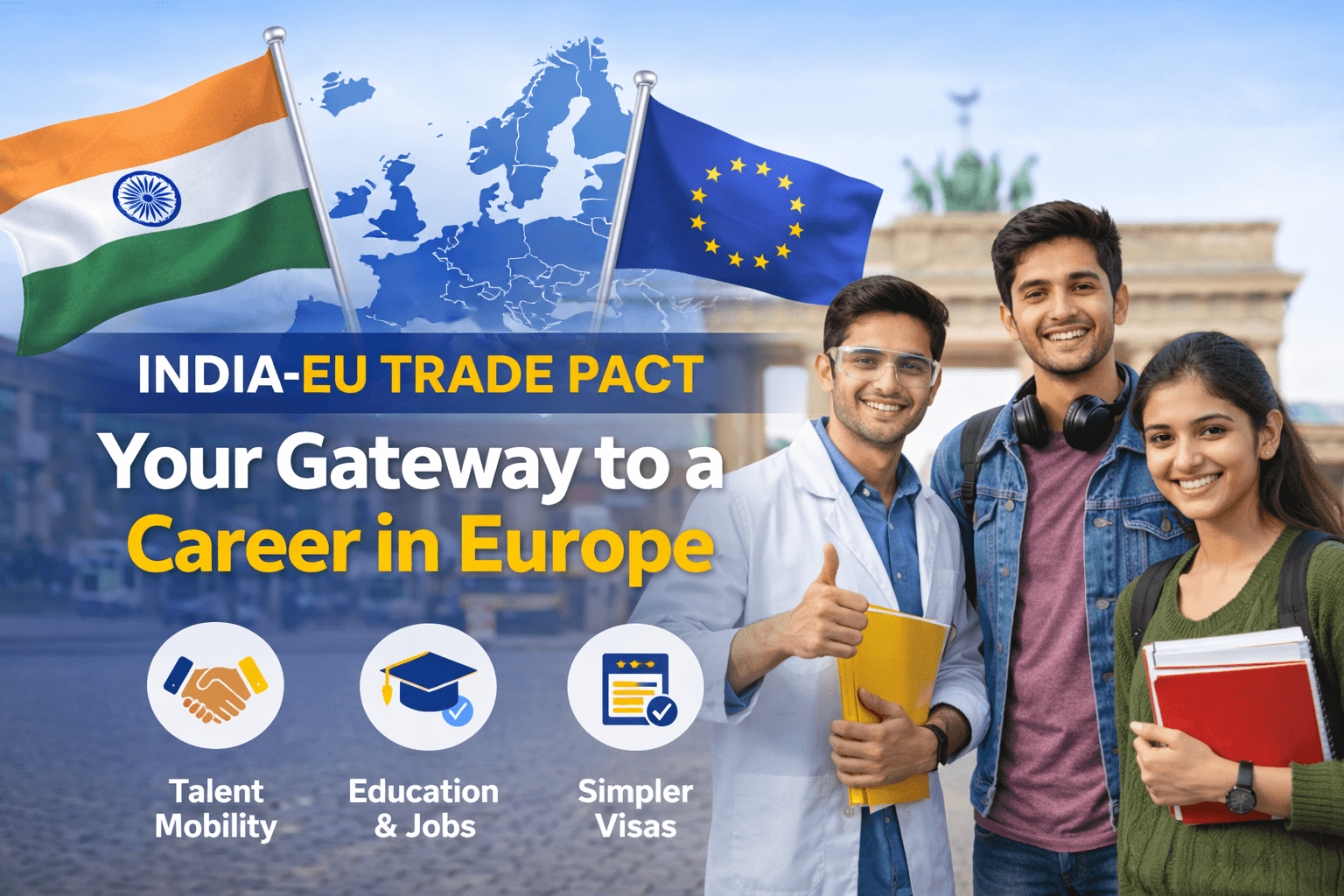
For young Indian students and professionals dreaming of building a career abroad, the recent India-EU Trade Pact is more than just a political headline, it’s a game changer. This agreement is creating real, tangible pathways for talented individuals to thrive in Europe. This article breaks down the five most impactful ways this pact could shape your future.


1. It’s Not About Goods, It’s About You
The most significant feature of this trade pact is its deliberate focus on talent mobility and skill-based migration. While trade agreements often center on products and tariffs, this one directly addresses a major European need for skilled individuals, making it uniquely personal for aspiring professionals. Strategically, this reframes you not as a job applicant, but as a high-value asset in a global talent marketplace.
This shifts the agreement’s focus from an abstract economic policy to a concrete personal opportunity. It recognizes that the most valuable asset being exchanged is human talent and expertise.
Simply put, Europe needs Indian talent more than ever before.
2. Europe’s Problem is Your Biggest Advantage
A fundamental supply-and-demand dynamic is at the heart of this opportunity. Europe is facing the dual challenges of an aging population and severe skill shortages, resulting in thousands of unfilled jobs across critical sectors.
In stark contrast, India has a young, skilled workforce well-versed in high-demand fields like technology, engineering, and healthcare. This perfect alignment means that Indian professionals are not just temporary visitors; they are positioned as indispensable partners in securing Europe’s long-term economic vitality.
3. Your Degree Is Now a Direct Gateway to a European Career
The pact significantly strengthens the connection between studying in Europe and building a career there. It facilitates smoother transitions from education to employment and builds stronger post-study work opportunities for Indian graduates from European universities.
This is a major shift. A European degree is transformed from a simple academic credential into a robust launch pad for your professional life, providing a clear and supported pathway from the classroom to the workplace. This integration of education and employment is a strategic advantage that significantly de-risks the investment in an overseas degree.
4. The Bureaucratic Hurdles Are Shrinking
For working professionals, the pact aims to cut through the red tape that has traditionally made international moves difficult. It introduces structured visa pathways and skill-based hiring models, which translate to quicker mobility and less bureaucratic hassle.
A crucial component is the mutual recognition of qualifications. This means skilled professionals can spend less time navigating complex relicensing procedures and more time advancing their careers in high-demand fields that are central to Europe’s next decade of growth, such as:
- IT and Software Development
- AI and Data Science
- Healthcare
- Green Energy
- Manufacturing
5. Timing is Critical, and the Time is Now
A unique combination of factors has created an extraordinary moment: high global demand for talent, supportive new policies, and India’s significant youth advantage. This alignment has opened a window of opportunity that may not last forever.
The message is clear: waiting could cost you the prime opportunities, the smoothest pathways, and the advantage of being an early mover in this new talent ecosystem. Those who start preparing early whether by learning new skills or getting career guidance will be best positioned to secure smoother visa processes, better job opportunities, and long-term professional stability.
A rare alignment of economic need, supportive policy, and demographic advantage has made a global career in Europe more attainable than ever for prepared Indian youth. This isn’t just a fleeting trend; it represents a structural shift in the global talent economy.
Leave A Comment